
If you had been following my two prior posts about my adventure on the river, this will be the final one as I share the amazement of Lock & Dam #16 on the Mississippi River.
I did not realize until this adventure how many dams there are on this river and actually how many rivers across the world share this same lock and dam technology. This part of the trip was my real reason for going. I love seeing how things work, so I will share some of things I thought interesting and maybe it will be interesting to you as well.
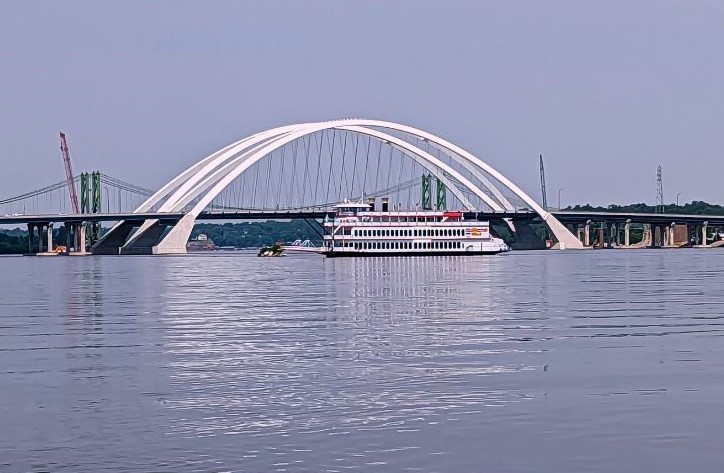
As we head downriver, the new I-74 bridge is the first structure we see. The official name for the bridge is the Iowa-Illinois Memorial Bridge. It replaced the old metal structured bridge which is currently being taken down.

At night, there are colored light that really show the beauty of this bridge. Depending on the season or holiday, the colors will change. Before getting to the bridge, there is this pile of boulders right in the middle. There evidently is enough soil on this small rock island to grow vegetation and usually it is surrounded by pelicans but today they are further down river.

Notice the numbers on the post with the orange caution signs…these are mile markers. The entire river is numbered and posted periodically. While there is no mileage map of the river, it is on a GPS of the river for the boat captains who use this river to know where they are at any given location. Our guide told us the number of products that in a year average up and down this river and I was amazed. Without the help of our rivers, a good portion of the products we use would be less getting to us.
As we got under the new I-74 bridge, you could see the old one as it is being dismantled and taken down. This twin bridge was originally a single bridge but as the area grew, it needed to be larger.
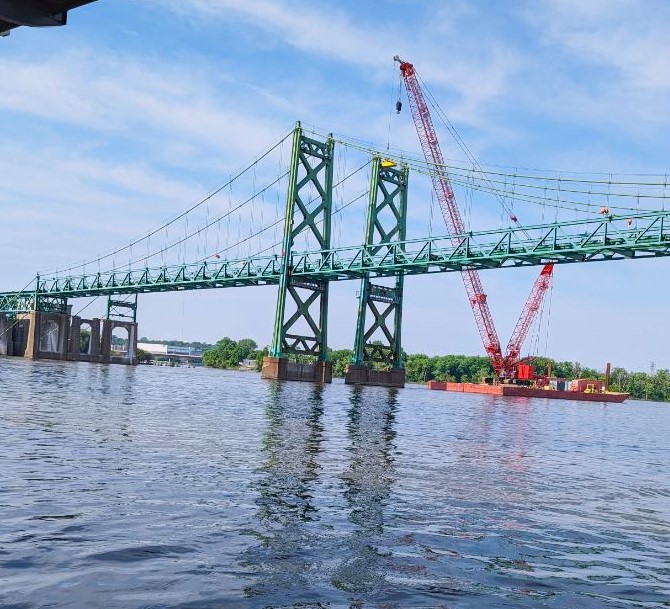

The first span opened in 1935 as a toll bridge. In 1959, an identical twin span was added to satisfy increased traffic. The twin spans were upgraded to carry interstate traffic in the mid-1970s. Built for a daily crossing of 48,000 vehicles, the daily average at its closing was 80,000, making it by far the most traveled bridge in the Quad Cities.
From the bridges, we headed to Lock and Dam #16. Upon entering, we tied off to the side and waited for the gates to close.
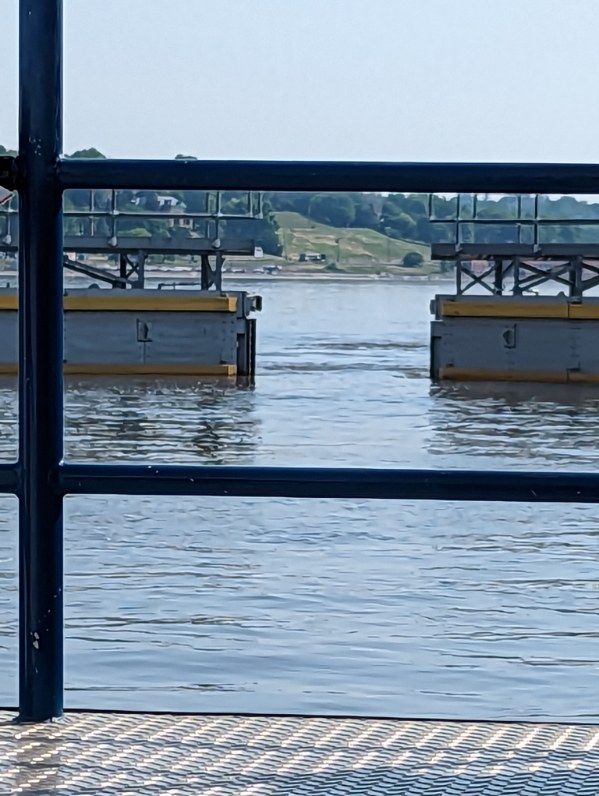

The lock system uses gravity to lower the water. Underneath the lock chamber are deep tunnels and when the gates are locked, the weight of the water above the tunnels pushes the water through the tunnels which lowers the boat.

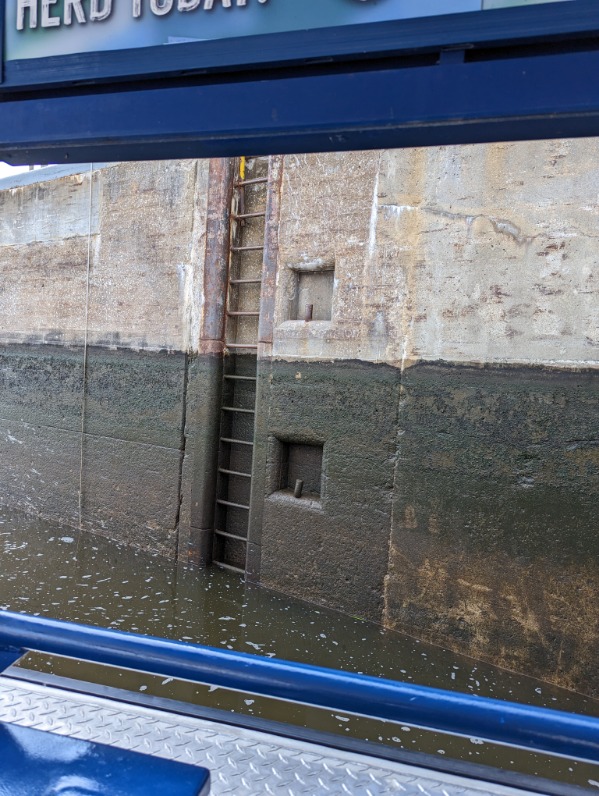
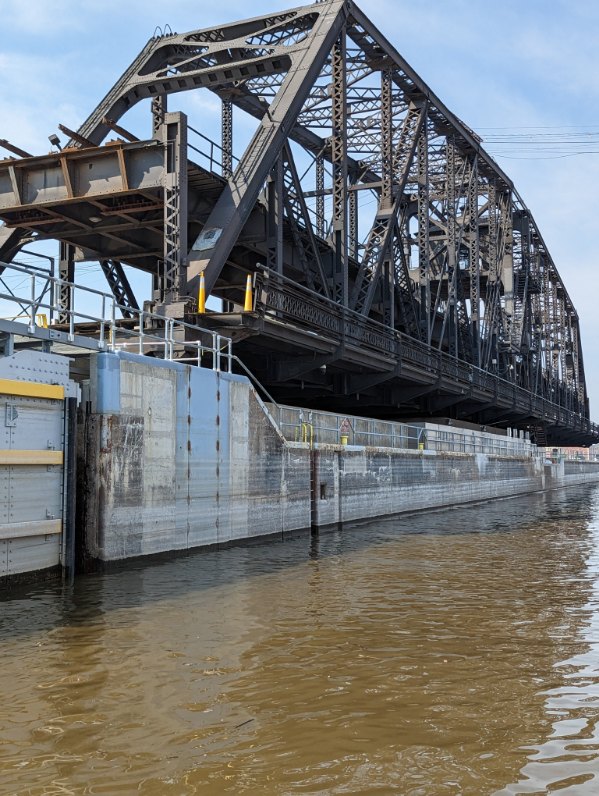
You can see how far the waterline fell for us to be able to exit the lock chamber. Because the lock is so close to the Arsenal bridge, when the river is running high, which it is now, the bridge has to open for boats to be able to pass under it.

This section of the bridge is operated by a trolley car engine that allows it to rotate 90 degrees allowing water traffic to pass by the bridge.
Because this section of the water flow is controlled and relatively calm, the downward river side is a haven for pelicans and other water birds.
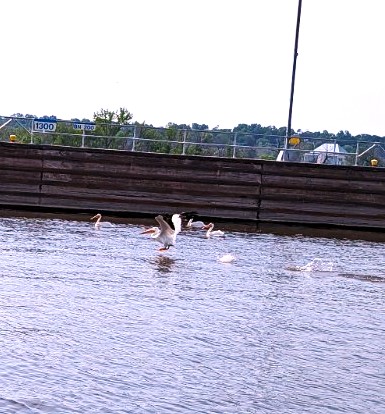
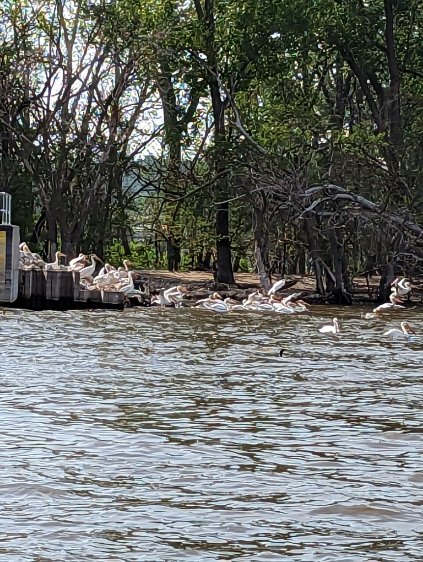
Once we were out of the lock, we could see the roller dam. From what our guide told us, this is the largest roller dam in the US. He also told us that the knowledge they learned when making this particular lock and dam was used when they made the much larger Panama lock and dam system.
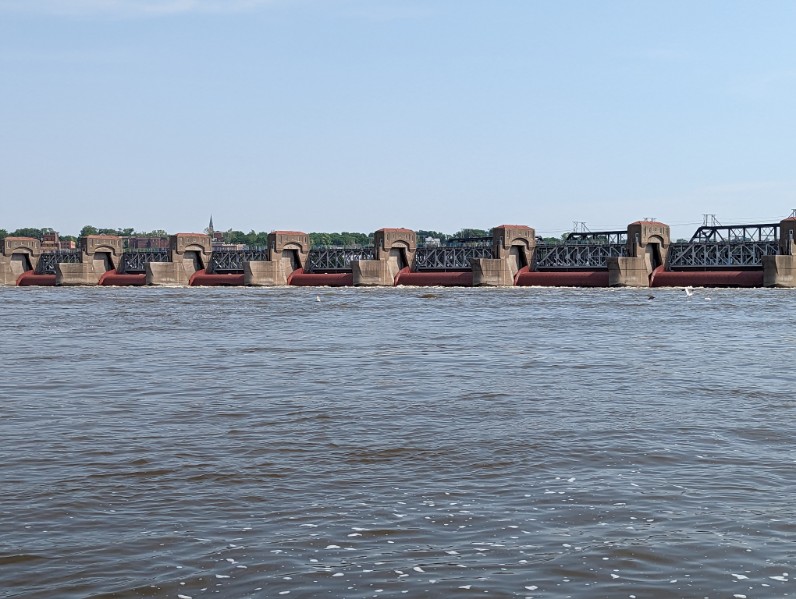

The water coming through the roller dam was a lot more turbulent than the water from the lock. The purpose of the roller dam is to break up and control ice flows during the winter.
As we traveled further down river we could see the Centennial Bridge but we turned before we got there and headed back to the dock.

Before returning to the dock, we went through the original lock from the late 1800s which is no longer in use but was still interesting the way the water flows through it.

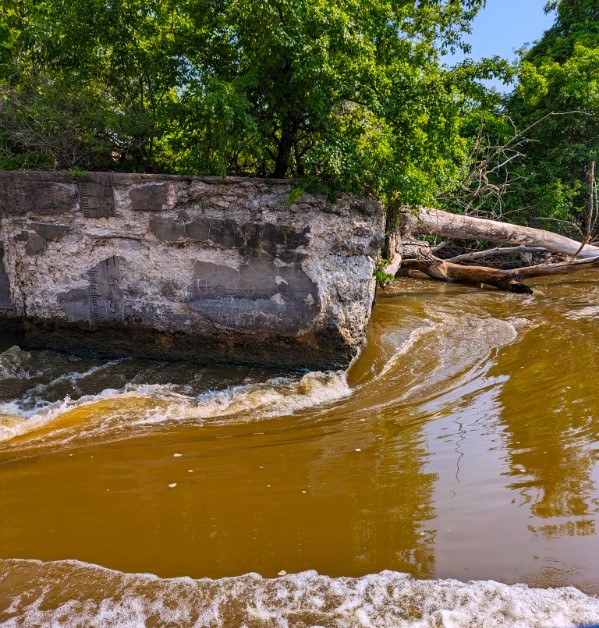
As we returned back through the lock we had a supervisor of sorts watching us to make sure we behaved…a blue heron. A really beautiful bird. He evidently is a regular guard.

All in all this was an interesting and fun excursion. I hope you enjoyed my photos and maybe learned something different. Below are some additional photos I took while on the river. Hope you enjoy them.




In closing I remind you of the beauty and power of kindness. The kinder we are, the hope is, the kinder the world will be. Lets at least do out part in always being kind.



 For the Love of